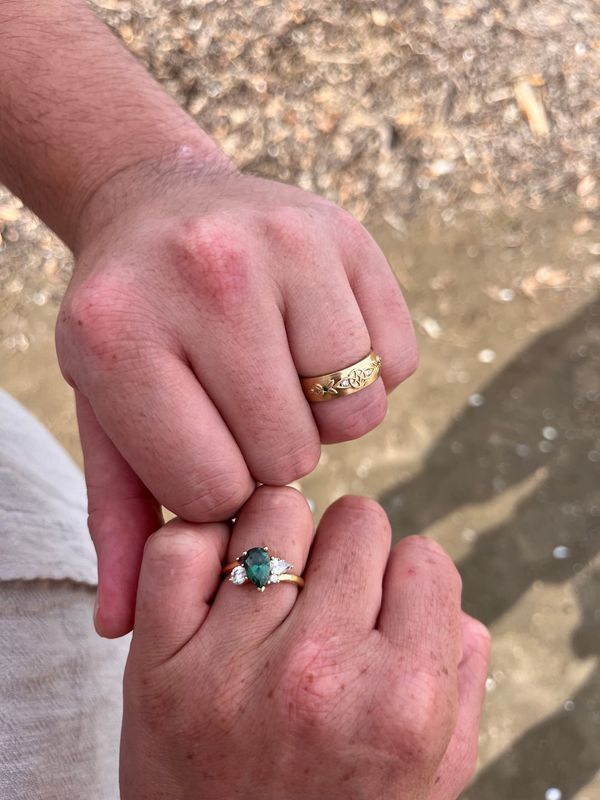
My Easter recommendation: Go watch No Tears on the Field


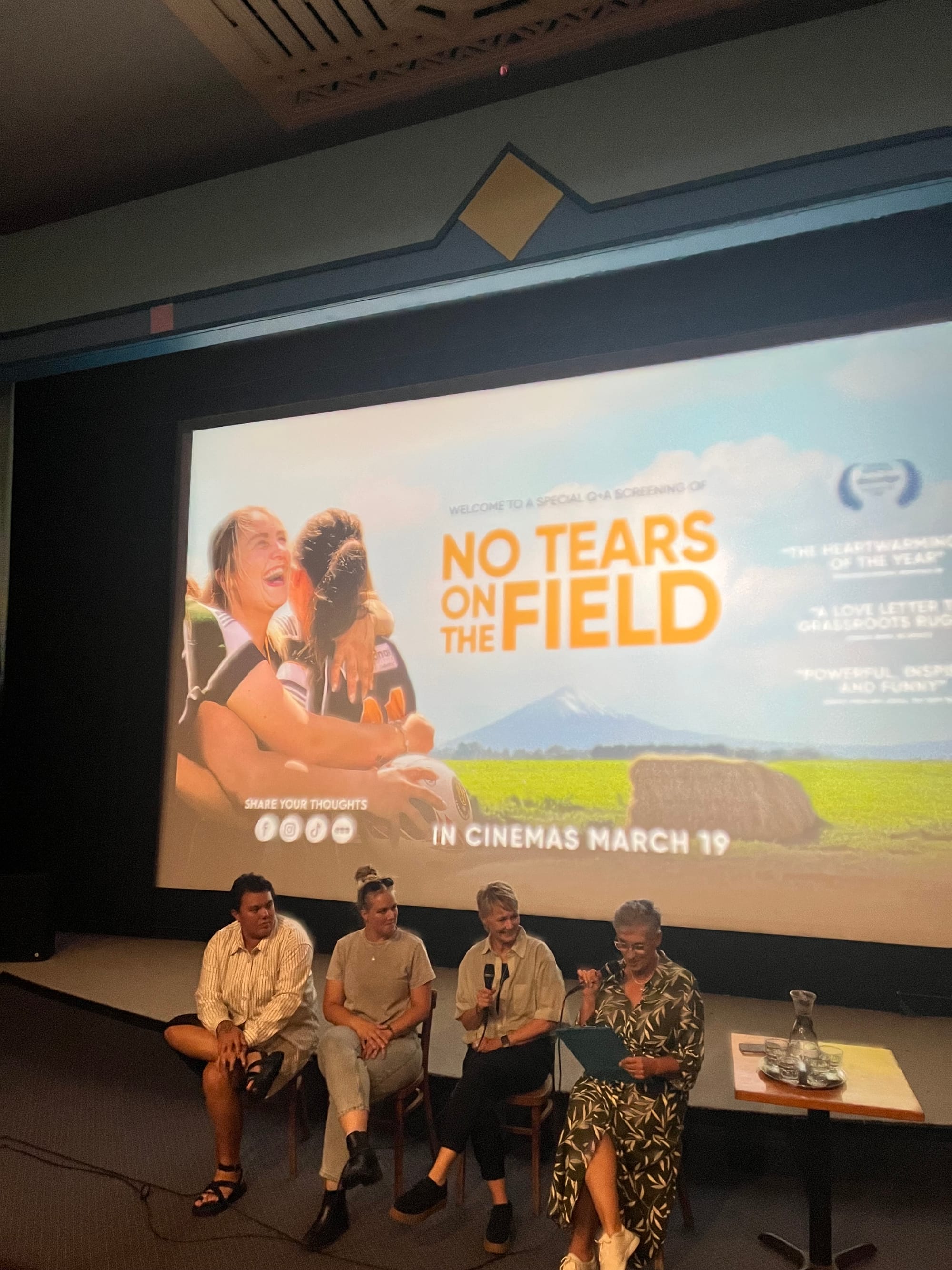
If I can recommend one activity to you this Easter weekend, it is to watch No Tears on the Field in cinemas.
I saw it two weeks ago for work and now I want everyone to watch it.
The locally-made film follows a group of women through the highs and lows of a season of club rugby in Taranaki.
Look, I make no secret of the fact that I love rugby. I think it's awesome and I will wax lyrical about it any chance I get.
But the crucial point I need to make is that level of fandom is not necessary in order to see No Tears on the Field.
When I interviewed the film's director, the award-winning Lisa Burd, she told me she didn't want people to think it was just about rugby.
Instead, it's about all the moments in between, the challenges these women go through as they navigate studies, work and family in the lead up to game day.
It's about legacy, resilience and camaraderie. About navigating grief and loss and finding joy.
All while still showing up for your team.
Tears in the audience
When I watched the film, I cried the entire way through - sometimes happy tears, sometimes sad tears.
I started playing rugby at the age of five in the countryside. It was considered a rite of passage - nearly every kid in my class at school also played in our team.
Until, all of a sudden, it wasn't - at least not for everyone. There came a time where girls were no longer supported or even made to feel like a welcome part of the team.
There was no place for girls like me, no matter how hard we tried. The simple truth was, we weren't boys, so nothing we could do was good enough.
I owe my persistence in that time to my family, who encouraged me to be strong and to keep playing until I got to high school and could join the 1st XV and then later, my local women's club.
Paying homage
I have seen one review of this film talk about how it shares the many decades of struggles women's rugby in Aotearoa has gone through in order to "get going" - and that this has been "done to death" over the years.
The male journalist writes that while it shouldn't be forgotten, these struggles are a story that should be left alone, unless that is what the movie is expressly about.
The problem with that sort of rhetoric is that the story can't be left alone, those conversations can't and shouldn't be silenced.
Yes, the Black Ferns and the Black Ferns Sevens are some of the best rugby teams in the world. But we must continue to pay homage to the route it took to get there, because there is still so much work left to go, especially at the club level.
No Tears on the Field captures this perfectly - focusing primarily on what it takes for women to take to the pitch - whether that's finding someone to watch the kids, rushing from the job on the farm to the field or driving over three hours to the game, because the only opponents you have are in the next region.
The constant battle of numbers and how some years there's just not enough to field a team. Then there's the continued lack of recognition for the success of these teams, time and time again.
This is something I personally experienced at high school - our team won the competition two years running and no one really batted an eyelid (well, our friends and families obviously did, but you know what I'm getting at here). That was over ten years ago and to hear anecdotally that this still happens is mind-boggling.
Giving recognition where it is due has to be one of the easiest wins of all time - it shouldn't even be a question.
A beautiful tribute
In short, No Tears on the Field is a beautiful tribute to both the power and importance of grassroots rugby.
And it would be remiss of me not to mention the team of girls featured in the film who show what's possible when there's a strong foundation from a young age.
One of them says she's been playing rugby since she was three. She and her teammates share how they want to be like their hero, Taranaki's own Black Fern and two-time Olympic medallist Michaela Brake (née Blyde). It is amazing to see the space that has been created for them.
That strong foundation, one that welcomes, supports and encourages girls to both play and stay in the game, is crucial. With that, there is no end to the opportunities they can seize.
As Kate Thomson, one of the players who features in the film, told me: grassroots rugby is the pipeline.
"It’s a natural path on the ladder if you want to become a Black Fern or you want to get into Super Rugby Aupiki. You’ve got to start somewhere."
Lessons from the pitch
While I don't play anymore, I'm ever grateful for the lessons from those 16 years on the field.
From learning how to balance my life with sport to wanting to make my parents and siblings proud.
The trainings and games that were done, no matter the weather. The hard hits, then showing off the bruises afterwards.
The constant battle to be confident and not be scared. The chance to express my physicality.
The year that I got play club rugby with my two older sisters and how awesome that felt.
Above all else, rugby gave me lessons in dedication, commitment and consistency. The importance of showing up, week in and week out.
Anyway, enough chat. If you get a chance - watch No Tears on the Field while it is still in cinemas. You won't be disappointed.