Why local media matters

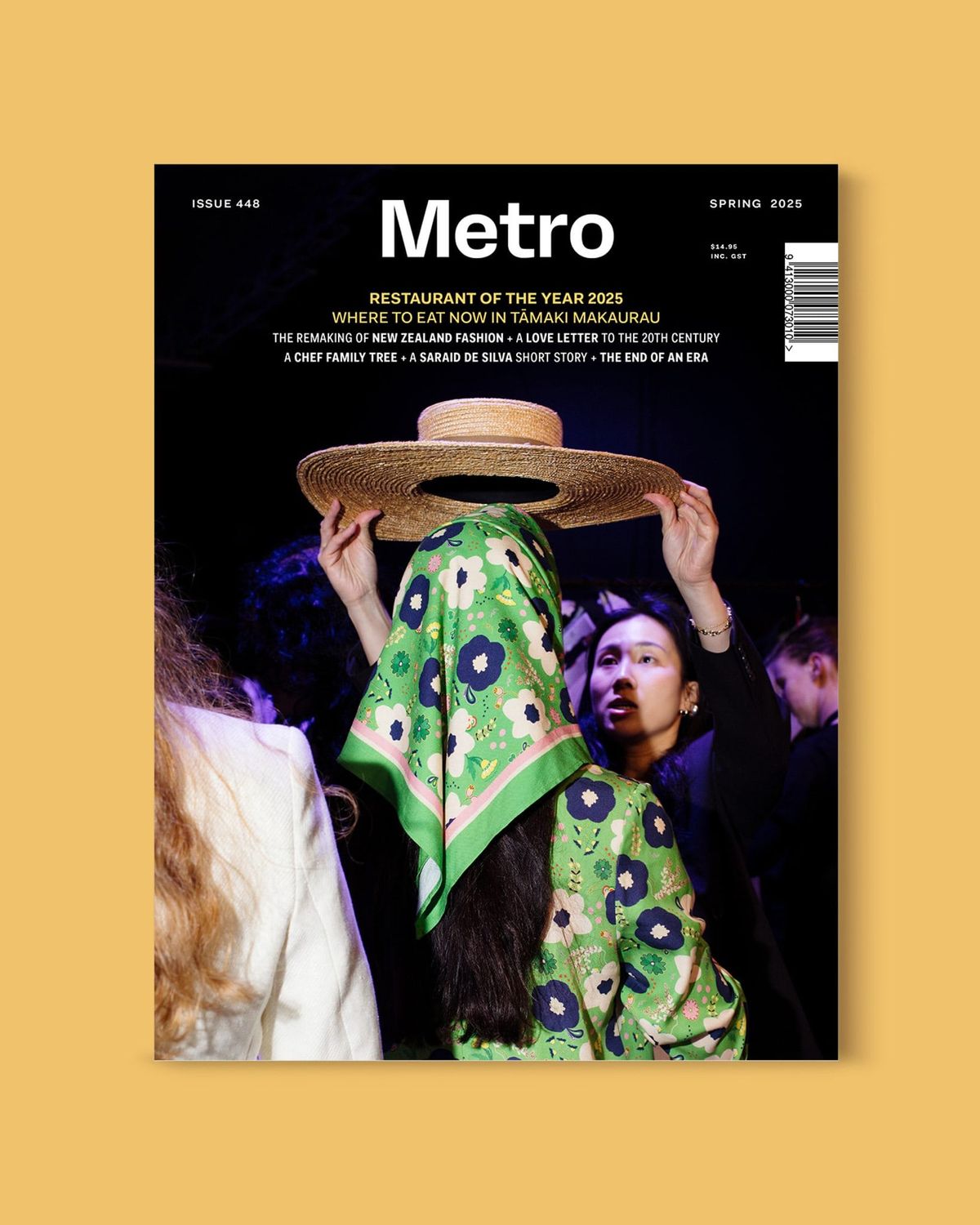
The first thing I read when I woke up on Tuesday was the news of Metro magazine’s major financial restructure.
Metro is a lifestyle and current affairs magazine for Tāmaki Makaurau Auckland that has been running since 1981.
In a story on NZ Herald (paywalled), Shayne Currie details the changes: the publication is losing all four of its full time staff, including its editor.
I feel sad to see yet another casualty from the swirling storm overhead that constantly threatens the media industry in Aotearoa.
I feel sad for the uncertainty of what comes next. Metro is known for its quality, long-form journalism. The magazine’s owners told the Herald that Metro will continue as a print-first publication and that they will engage “guest editors”, but there’s no telling yet what that will look like and how this will impact the quality of the magazine. (My assumption here is a lot and not in a good way).
The Spinoff's Madeleine Chapman puts it excellently in her weekend editorial:
"Magazines like Metro require real people with real journalism, writing, design and editing skills to produce it. All of those people are no longer working at Metro. So why, and how, has it not folded?"
I feel sad that that after a dark and dismal 2024 for the media industry, 2025 hasn’t been much better with redundancies, closures, restructures. Just a couple of weeks ago, RNZ announced it would be shutting down its youth platform Tahi.
I feel sad to have only learnt today that the article that led to the Cartwright Inquiry was published in Metro.
This is an aside but this article was a turning point for the health system here in Aotearoa. An Unfortunate Experiment, was written by Sandra Coney and Phillida Bunkle and was published in Metro in 1987. It revealed unethical practices being undertaken at the National Women’s Hospital: a study that followed women with major cervical abnormalities without treating them and without their knowledge or consent. After 20 years, many had cervical cancer and some had died.
The Cartwright Inquiry followed and led to major reform: including the introduction of the national cervical screening programme and the creation of the health and disability commissioner to protect and promote the rights of patients.
I feel sad for the Metro team who no longer get to make the magazine they loved.
Half of my career has been in print and I know what goes into it: the crazy deadlines, the late nights and the hours and hours of proofreading pages.
But also the freedom of writing long form, beautiful page designs, short and witty coverlines.
The joy of having the finished, physical product in your hand when it’s all over.
Then gearing up to do it all over again.
I feel sad and I feel tired that the blows just keep coming and it’s getting harder for media companies to stay upright.
In September, the government announced new subjects it would introduce in schools come 2028. Media and journalism was one of them.
It’s an interesting and potentially exciting change – I for one would have loved to have study journalism at school – but, as I wrote on LinkedIn, I only see it paying off only if there is support, sustainability and continued investment in the current journalism industry here in Aotearoa.
The changes at Metro and every other outlet in the last few years are case in point against that.
Then, a couple of weeks ago I saw a post from a Kiwi with a large social media following showing people a hack to read articles behind a paywall.
I believe that the advice was mostly given in good faith, but that post has stuck with me since I saw it.
Before that post, it had never really occurred to me to try and bypass a paywall. If I come across a paywalled piece I need for my own research, I might ask someone I know who has an account for access. Otherwise I consider if I can afford it and how much I would use the subscription outside of this one article. If the answer to those is no and not much, then I try to find another way to source the information.
More often than not, if you reach out to the journalist, they may be able to find a way to provide you with the article you want for free (speaking from experience).
No journalist wants their work to be paywalled. We want to be able to share our stories with others and a paywall is an active hindrance to that.
Some outlets have a membership system worked out that doesn’t see their work behind a paywall. Two such outlets I subscribe to: The Spinoff, which gives you extra newsletters and VIP access to events. At Shit You Should Care About you also get bonus content as well as access to a global book club.
But, the point of this is not to say that everyone should have a subscription to every outlet – in this economy? That would be crazy.
It’s more to further understanding of how and why publications are struggling.
Media companies need to make money somehow, now more than ever, so they can pay their teams: the journalists, the designers, the photographers, the videographers and many others doing the work.
Most outlets run a combination of subscription models and advertisements to keep afloat.
These days, advertising revenue is harder to come by as companies continue to send their dollars offshore to the likes of Meta and Google.
As a result, local media is stuck between a rock and a hard place. There's no easy fix for this, at least that I can see (if anyone else can see one, I'm all ears).
Media is becoming more fragmented than ever and with it comes rising public mistrust. In some cases, I don’t blame them. Look at the way some outlets continue to use passive language when reporting on Israel's genocide in Gaza to dehumanise Palestinians. Emily Writes’ piece on this is devastating but shows just how powerful words can be.
It makes me ashamed. The cruel irony is, I wanted to be a journalist in the first place because I've always felt I understood how powerful words are and I want to use them for good.
But I know those practices that breed mistrust don't speak for all of us - the ones who are drawn to journalism to help people, whether that's by breaking news, writing food reviews or reporting on local sports competitions. All are equally important and all are equally under threat.
The fact remains, I genuinely love being a journalist.
I love taking time to craft a feature article just as much as I love smashing out a breaking news story. Believe it or not, I even love the adrenalin rush that a deadline gives me.
But most of all, I love the privilege of being able to talk to people and share their stories. And I, like so many of colleagues, want to keep doing that for as long as possible.